切片(Slice)类型
切片(Slice) 让你可以引用集合中一段连续的元素序列。切片(Slice)是一种引用,因此它没有所有权。
这里有一个小编程问题:编写一个函数,它接收一个用空格分隔单词的字符串,并返回该字符串中找到的第一个单词。如果函数在字符串中没有找到空格,则整个字符串就是一个单词,所以应该返回整个字符串。
注意:为了介绍切片(Slice),本节仅假设使用 ASCII 字符;关于 UTF-8 处理的更详细讨论在第 8 章的“使用字符串存储 UTF-8 编码的文本”部分。
让我们先来思考一下,如果不使用切片(Slice),我们该如何编写这个函数的签名,以便理解切片(Slice)要解决的问题:
fn first_word(s: &String) -> ?first_word 函数有一个 &String 类型的参数。我们不需要所有权,所以这没问题。(在惯用的 Rust 代码中,函数除非必要,否则不会获取参数的所有权,原因我们将在后续中逐渐明了。)但是我们应该返回什么呢?我们确实没有办法来描述字符串的一部分。不过,我们可以返回单词结尾的索引(Index),由空格来指示。让我们试试看,如示例 4-7 所示。
fn first_word(s: &String) -> usize {
    let bytes = s.as_bytes();

    for (i, &item) in bytes.iter().enumerate() {
        if item == b' ' {
            return i;
        }
    }

    s.len()
}

fn main() {}first_word 函数返回 String 参数中的一个字节索引值因为我们需要逐元素地检查 String 中的值是否为空格,所以我们将使用 as_bytes 方法将 String 转换为字节数组。
fn first_word(s: &String) -> usize {
    let bytes = s.as_bytes();

    for (i, &item) in bytes.iter().enumerate() {
        if item == b' ' {
            return i;
        }
    }

    s.len()
}

fn main() {}
接下来,我们使用 iter 方法在字节数组上创建一个迭代器(Iterator):
fn first_word(s: &String) -> usize {
    let bytes = s.as_bytes();

    for (i, &item) in bytes.iter().enumerate() {
        if item == b' ' {
            return i;
        }
    }

    s.len()
}

fn main() {}我们将在第 13 章中更详细地讨论迭代器(Iterator)。现在,你只需要知道 iter 是一个返回集合中每个元素的方法,而 enumerate 包装了 iter 的结果,将每个元素作为元组(Tuple)的一部分返回。enumerate 返回的元组中的第一个元素是索引(Index),第二个元素是对该元素的引用。这比我们自己计算索引要方便一些。
因为 enumerate 方法返回一个元组(Tuple),我们可以使用模式(Pattern)来解构这个元组。我们将在第 6 章中更多地讨论模式(Pattern)。在 for 循环中,我们指定了一个模式:元组中的索引使用 i,元组中的单个字节使用 &item。因为我们从 .iter().enumerate() 获取的是元素的引用,所以我们在模式中使用了 &。
在 for 循环内部,我们使用字节字面量语法来搜索代表空格的字节。如果找到空格,就返回该位置。否则,使用 s.len() 返回字符串的长度。
fn first_word(s: &String) -> usize {
    let bytes = s.as_bytes();

    for (i, &item) in bytes.iter().enumerate() {
        if item == b' ' {
            return i;
        }
    }

    s.len()
}

fn main() {}
现在我们有办法找出字符串中第一个单词结尾的索引(Index),但有一个问题。我们返回了一个单独的 usize,但它只有在 &String 的上下文中才是一个有意义的数字。换句话说,因为它是一个与 String 分离的值,无法保证它在未来仍然有效。请考虑示例 4-8 中的程序,它使用了示例 4-7 中的 first_word 函数。
fn first_word(s: &String) -> usize {
    let bytes = s.as_bytes();

    for (i, &item) in bytes.iter().enumerate() {
        if item == b' ' {
            return i;
        }
    }

    s.len()
}

fn main() {
    let mut s = String::from("hello world");

    let word = first_word(&s); // word will get the value 5

    s.clear(); // this empties the String, making it equal to ""

    // word still has the value 5 here, but s no longer has any content that we
    // could meaningfully use with the value 5, so word is now totally invalid!
}first_word 函数的结果,然后更改 String 的内容这段程序编译时没有任何错误,而且在调用 s.clear() 之后使用 word 也不会有问题。因为 word 与 s 的状态完全没有关联,word 仍然包含值 5。我们可以用那个值 5 和变量 s 来尝试提取第一个单词,但这将是一个错误(Bug),因为自从我们将 5 保存到 word 中之后,s 的内容已经改变了。
担心 word 中的索引(Index)与 s 中的数据不同步是繁琐且容易出错的!如果我们编写一个 second_word 函数,管理这些索引(Index)会变得更加脆弱。它的签名必须像这样:
fn second_word(s: &String) -> (usize, usize) {现在我们追踪的是起始_和_结束索引(Index),而且我们有更多的值是根据特定状态下的数据计算出来的,却完全没有与该状态绑定。我们有三个不相关的变量需要保持同步。
幸运的是,Rust 对此问题有一个解决方案:字符串切片(String Slice)。
字符串切片(String Slice)
字符串切片(String Slice) 是对 String 中一段连续元素的引用,它看起来像这样:
fn main() {
    let s = String::from("hello world");

    let hello = &s[0..5];
    let world = &s[6..11];
}
hello 不是对整个 String 的引用,而是对 String 一部分的引用,通过额外的 [0..5] 部分来指定。我们使用方括号内的范围(Range)来创建切片(Slice),通过指定 [starting_index..ending_index],其中 starting_index 是切片(Slice)中的第一个位置,而 ending_index 是切片(Slice)中最后一个位置的下一个位置。在内部,切片(Slice)的数据结构存储了起始位置和切片(Slice)的长度,该长度对应于 ending_index 减去 starting_index。因此,对于 let world = &s[6..11]; 的情况,world 将是一个切片(Slice),它包含一个指向 s 中索引 6 处字节的指针,长度值为 5。
图 4-7 以图表形式展示了这一点。
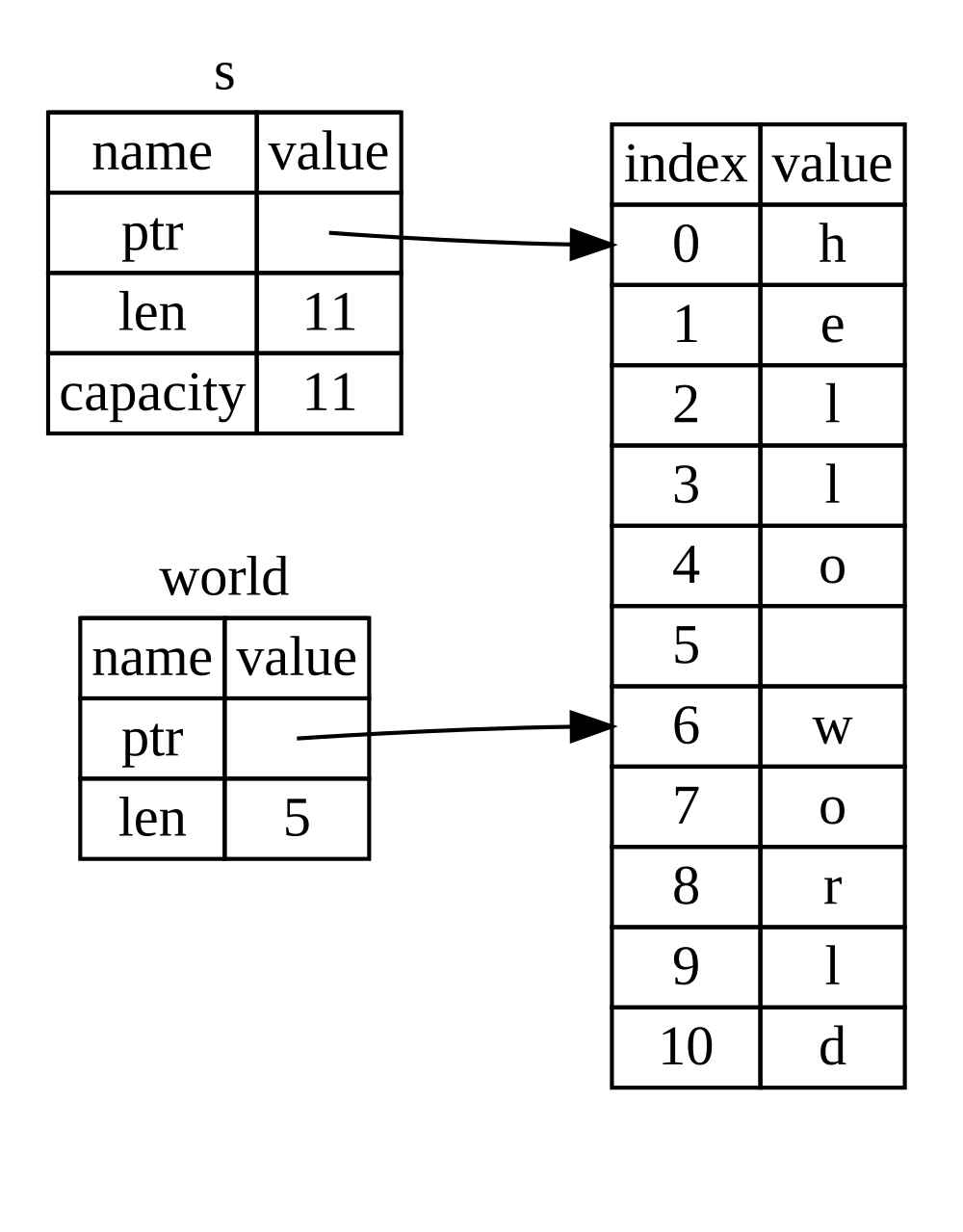
图 4-7:引用 String 一部分的字符串切片(String Slice)
使用 Rust 的 .. 范围(Range)语法,如果你想从索引 0 开始,可以省略两个点之前的值。换句话说,以下是等价的:
#![allow(unused)]
fn main() {
let s = String::from("hello");

let slice = &s[0..2];
let slice = &s[..2];
}
同理,如果你的切片(Slice)包含 String 的最后一个字节,你可以省略尾部的数字。这意味着以下是等价的:
#![allow(unused)]
fn main() {
let s = String::from("hello");

let len = s.len();

let slice = &s[3..len];
let slice = &s[3..];
}
你也可以同时省略两个值来获取整个字符串的切片(Slice)。因此,以下是等价的:
#![allow(unused)]
fn main() {
let s = String::from("hello");

let len = s.len();

let slice = &s[0..len];
let slice = &s[..];
}
注意:字符串切片(String Slice)的范围(Range)索引必须位于有效的 UTF-8 字符边界上。如果你尝试在多字节字符的中间创建字符串切片,程序将退出并报错。
有了这些信息,我们来重写 first_word 以返回一个切片(Slice)。表示“字符串切片“的类型写作 &str:
fn first_word(s: &String) -> &str {
    let bytes = s.as_bytes();

    for (i, &item) in bytes.iter().enumerate() {
        if item == b' ' {
            return &s[0..i];
        }
    }

    &s[..]
}

fn main() {}
我们使用与示例 4-7 相同的方式获取单词结尾的索引(Index):寻找第一个出现的空格。当找到空格时,我们返回一个字符串切片(String Slice),以字符串的开头和空格的索引作为起始和结束索引。
现在当我们调用 first_word 时,我们返回一个与底层数据绑定的单一值。该值由指向切片(Slice)起始点的引用和切片中元素的数量组成。
返回切片(Slice)同样适用于 second_word 函数:
fn second_word(s: &String) -> &str {现在我们有了一个更不易出错的直观 API,因为编译器会确保对 String 的引用保持有效。还记得示例 4-8 程序中的错误(Bug)吗?我们获取了第一个单词结尾的索引(Index),然后清空了字符串,导致索引失效?那段代码在逻辑上是错误的,但没有立即显示任何错误。如果我们继续尝试使用已清空字符串的第一个单词索引,问题会在之后暴露出来。切片(Slice)使这种错误(Bug)变得不可能,并让我们更早地知道代码存在问题。使用切片版本的 first_word 会抛出一个编译时错误:
fn first_word(s: &String) -> &str {
    let bytes = s.as_bytes();

    for (i, &item) in bytes.iter().enumerate() {
        if item == b' ' {
            return &s[0..i];
        }
    }

    &s[..]
}

fn main() {
    let mut s = String::from("hello world");

    let word = first_word(&s);

    s.clear(); // error!

    println!("the first word is: {word}");
}
这是编译器错误:
$ cargo run
   Compiling ownership v0.1.0 (file:///projects/ownership)
error[E0502]: cannot borrow `s` as mutable because it is also borrowed as immutable
  --> src/main.rs:18:5
   |
16 |     let word = first_word(&s);
   |                           -- immutable borrow occurs here
17 |
18 |     s.clear(); // error!
   |     ^^^^^^^^^ mutable borrow occurs here
19 |
20 |     println!("the first word is: {word}");
   |                                   ---- immutable borrow later used here

For more information about this error, try `rustc --explain E0502`.
error: could not compile `ownership` (bin "ownership") due to 1 previous error
回顾一下借用规则(Borrowing Rules):如果我们对某个值拥有不可变引用,就不能再获取可变引用。因为 clear 需要截断 String,它需要获取一个可变引用。而 clear 调用之后的 println! 使用了 word 中的引用,所以此时不可变引用必须仍然活跃。Rust 不允许 clear 中的可变引用和 word 中的不可变引用同时存在,因此编译失败。Rust 不仅让我们的 API 更易于使用,还在编译时消除了一整类错误!
字符串字面量(String Literal)作为切片(Slice)
回想一下,我们提到过字符串字面量(String Literal)存储在二进制文件中。既然我们已经了解了切片(Slice),就可以恰当地理解字符串字面量了:
#![allow(unused)]
fn main() {
let s = "Hello, world!";
}
这里 s 的类型是 &str:它是一个指向二进制文件中该特定点的切片(Slice)。这也是字符串字面量不可变的原因;&str 是一个不可变引用。
字符串切片(String Slice)作为参数
知道你可以获取字面量和 String 值的切片(Slice)后,我们对 first_word 有了进一步的改进,那就是它的签名:
fn first_word(s: &String) -> &str {更有经验的 Rustacean 会编写如示例 4-9 所示的签名,因为它允许我们对 &String 值和 &str 值使用同一个函数。
fn first_word(s: &str) -> &str {
    let bytes = s.as_bytes();

    for (i, &item) in bytes.iter().enumerate() {
        if item == b' ' {
            return &s[0..i];
        }
    }

    &s[..]
}

fn main() {
    let my_string = String::from("hello world");

    // `first_word` works on slices of `String`s, whether partial or whole.
    let word = first_word(&my_string[0..6]);
    let word = first_word(&my_string[..]);
    // `first_word` also works on references to `String`s, which are equivalent
    // to whole slices of `String`s.
    let word = first_word(&my_string);

    let my_string_literal = "hello world";

    // `first_word` works on slices of string literals, whether partial or
    // whole.
    let word = first_word(&my_string_literal[0..6]);
    let word = first_word(&my_string_literal[..]);

    // Because string literals *are* string slices already,
    // this works too, without the slice syntax!
    let word = first_word(my_string_literal);
}s 参数的类型改为字符串切片来改进 first_word 函数如果我们有一个字符串切片(String Slice),可以直接传递它。如果我们有一个 String,可以传递 String 的切片或对 String 的引用。这种灵活性利用了解引用强制多态(Deref Coercion)的特性,我们将在第 15 章的“在函数和方法中使用解引用强制多态”部分介绍。
定义一个接受字符串切片(String Slice)而不是 String 引用的函数,使我们的 API 更加通用和有用,同时没有丢失任何功能:
fn first_word(s: &str) -> &str {
    let bytes = s.as_bytes();

    for (i, &item) in bytes.iter().enumerate() {
        if item == b' ' {
            return &s[0..i];
        }
    }

    &s[..]
}

fn main() {
    let my_string = String::from("hello world");

    // `first_word` works on slices of `String`s, whether partial or whole.
    let word = first_word(&my_string[0..6]);
    let word = first_word(&my_string[..]);
    // `first_word` also works on references to `String`s, which are equivalent
    // to whole slices of `String`s.
    let word = first_word(&my_string);

    let my_string_literal = "hello world";

    // `first_word` works on slices of string literals, whether partial or
    // whole.
    let word = first_word(&my_string_literal[0..6]);
    let word = first_word(&my_string_literal[..]);

    // Because string literals *are* string slices already,
    // this works too, without the slice syntax!
    let word = first_word(my_string_literal);
}
其他切片(Slice)
你可以想象,字符串切片(String Slice)是针对字符串的。但也有更通用的切片类型。考虑这个数组:
#![allow(unused)]
fn main() {
let a = [1, 2, 3, 4, 5];
}
就像我们可能想要引用字符串的一部分一样,我们可能想要引用数组的一部分。我们可以这样做:
#![allow(unused)]
fn main() {
let a = [1, 2, 3, 4, 5];

let slice = &a[1..3];

assert_eq!(slice, &[2, 3]);
}
这个切片(Slice)的类型是 &[i32]。它的工作方式与字符串切片相同,通过存储对第一个元素的引用和一个长度。你会在各种其他集合中使用这种切片。当我们谈到第 8 章的向量(Vector)时,我们将详细讨论这些集合。
总结
所有权(Ownership)、借用(Borrowing)和切片(Slice)这些概念确保了 Rust 程序在编译时的内存安全。Rust 语言像其他系统编程语言一样,让你能够控制内存使用。但是,当所有者(Owner)离开作用域时,数据的所有者会自动清理数据,这意味着你不需要为此编写和调试额外的代码。
所有权(Ownership)影响着 Rust 中许多其他部分的工作方式,因此我们将在本书的其余部分进一步讨论这些概念。让我们进入第 5 章,看看如何将数据片段组合到 struct 中。